
The cybersecurity landscape of 2026 is defined by a staggering paradox: while organizations are investing more than ever in defense, the “readiness gap” continues to widen. Despite the availability of advanced tools, 90% of organizations still rely on passwords as their primary method of authentication, leaving them highly vulnerable to credential-based attacks. This persistence of legacy systems, combined with a severe skills crisis and the rapid weaponization of AI, has created a perfect storm where nearly 70% of companies have suffered an identity-related breach in the last three years.
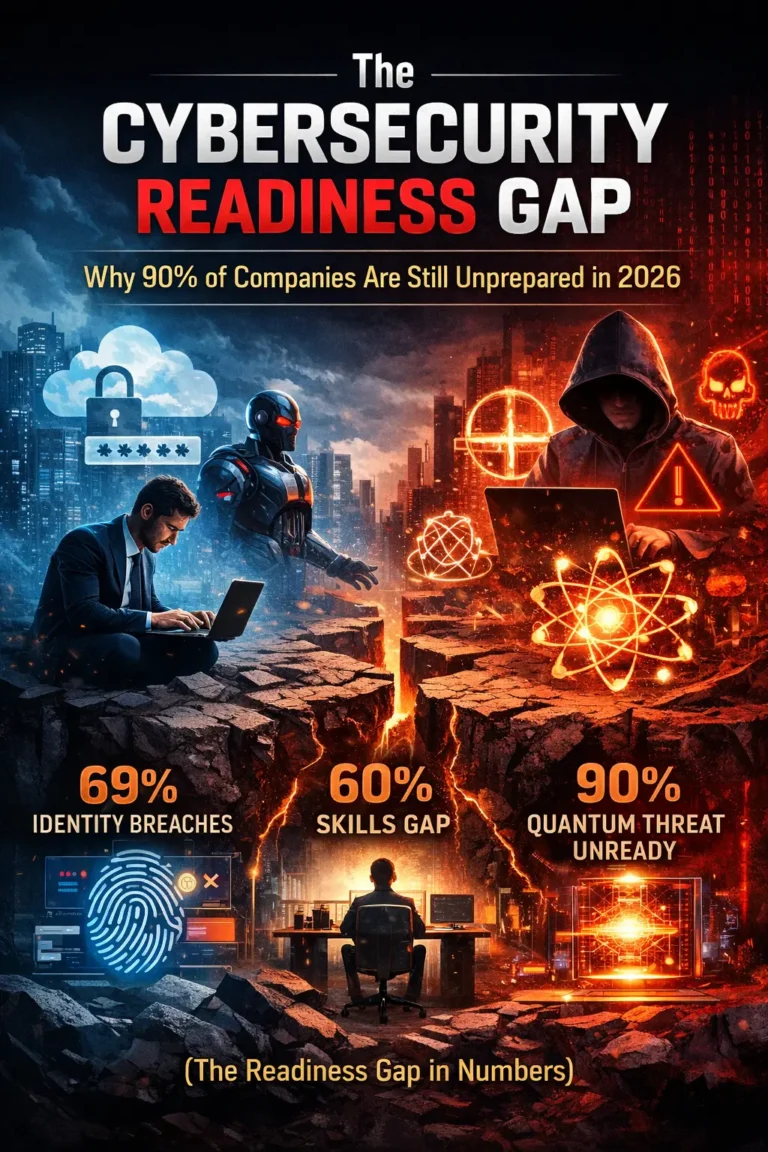
The most critical vulnerability remains identity. The 2026 RSA ID IQ Report reveals that identity-related breaches have surged, with 69% of organizations reporting a breach in the last three years—a 27-percentage-point increase since 2025. The financial consequences are catastrophic: nearly one-quarter of affected organizations reported that an identity breach cost them more than $10 million.
While many leaders believe they are making progress, there is a massive “confidence gap.” For instance, 91% of organizations have not yet reached optimal Zero Trust maturity, even though many believe they are at an “advanced” stage. This disconnect often stems from a failure to move beyond passwords, even though the global average cost for data breaches originating from phishing is now $4.8 million.
A fundamental shift has occurred in the cybersecurity workforce. The crisis is no longer about filling empty seats; it is about a deficiency in capability. Approximately 60% of organizations report that their teams lack the specialized skills required to defend against 2026-level threats.
This skills gap is directly translating into security failures, with 27% of organizations reporting breaches specifically linked to workforce capability gaps. Furthermore, the average time to hire experts has ballooned, with 38% of expert roles remaining open for over a year, leaving organizations exposed during critical periods.
AI is the single most significant driver of cybersecurity change in 2026, with 94% of experts identifying it as a primary influence. However, this technology is a double-edged sword:
Cyber-Enabled Fraud: Fraud has reached epidemic proportions, displacing ransomware as the number one concern for CEOs. 73% of professionals report being personally affected by cyber-enabled fraud in the past 12 months.
Perhaps the most alarming reason for the 90% unreadiness figure is the lack of preparation for quantum computing. Nearly 90% of companies are unprepared for quantum security threats, which are expected to reach scale by 2028.
State-sponsored actors are currently engaged in “harvest now, decrypt later” (HNDL) strategies, collecting encrypted data today with the intention of decrypting it once quantum technology matures. Despite warnings that asymmetric cryptography will become unsafe by 2030, few organizations have begun rolling out post-quantum cryptography (PQC).
The readiness gap is even more pronounced for Small and Medium Enterprises (SMEs). These organizations face 87% of all cyberattacks but often lack the budget and specialized personnel to implement enterprise-level incident response frameworks. Many SMEs still struggle to translate high-level guidance into implementable procedures, operating without dedicated security staff and relying on external IT support that may not be integrated into their emergency response plans.
To move out of the “unprepared” 90%, organizations must shift from reactive hiring to capability-driven restructuring. Key strategies include:
The likelihood of a breach—and the cost of inaction—is simply too high to maintain the status quo in 2026. Organizations that fail to adapt their governance and workforce capabilities will find themselves on the wrong side of the resilience divide.
Secureflo addresses this cybersecurity readiness gap by translating complexity into clear, actionable intelligence tailored to each organization’s reality. Instead of relying on generic checklists or expensive consulting cycles, Secureflo evaluates a company’s specific context—its geography, industry, tech stack, and regulatory exposure—and delivers a precise assessment of where it stands across critical security domains. It identifies identity vulnerabilities, highlights compliance gaps tied to frameworks like SOC 2 and GDPR, and surfaces risks introduced by modern factors such as AI adoption and cloud misconfigurations. More importantly, it converts these findings into a prioritized action plan, enabling teams to move from awareness to execution without needing large in-house security expertise. In a landscape where most organizations lack clarity on what to fix first, Secureflo functions as a decision engine—helping businesses systematically improve their security posture and confidently transition from being part of the “unprepared 90%” to becoming resilient, audit-ready organizations.
Free assessment from Secureflo. Calibrated to your industry, country, and stack. Get immediate visibility into your institutional grade reliability.